Physical Address
304 North Cardinal St.
Dorchester Center, MA 02124
Physical Address
304 North Cardinal St.
Dorchester Center, MA 02124



Freelance Contracts are the difference between thriving and struggling as a freelancer. Many freelancers don’t fail because they lack skill, they fail because they lack protection.
In 2026, freelancing is more global, digital, and competitive than ever. Clients come from different countries, laws vary widely, and misunderstandings can turn into expensive disputes overnight. A solid freelance contract isn’t a formality, it’s your first and strongest line of defense.
According to a Harvard Business Review analysis, freelancers with written contracts are significantly more likely to get paid on time, avoid scope creep, and resolve disputes quickly.
This guide breaks down 7 crucial contract clauses every freelancer must include, explains why each one matters, and shows how they protect your time, income, and peace of mind.
The modern freelance economy creates unique risks:
A clear contract doesn’t scare good clients, it reassures them.
Key Insight: Contracts don’t create conflict. They prevent it.
This is the most important clause in any freelance contract.
Example:
Instead of writing “design a website,” specify “design a 5-page marketing website with desktop and mobile layouts, including two revision rounds.”
Scope creep is the #1 cause of freelancer burnout and unpaid labor.
Reference: The World Economic Forum notes that unclear expectations are a leading cause of freelancer–client conflict.
Takeaway: If it’s not written, it’s not included.
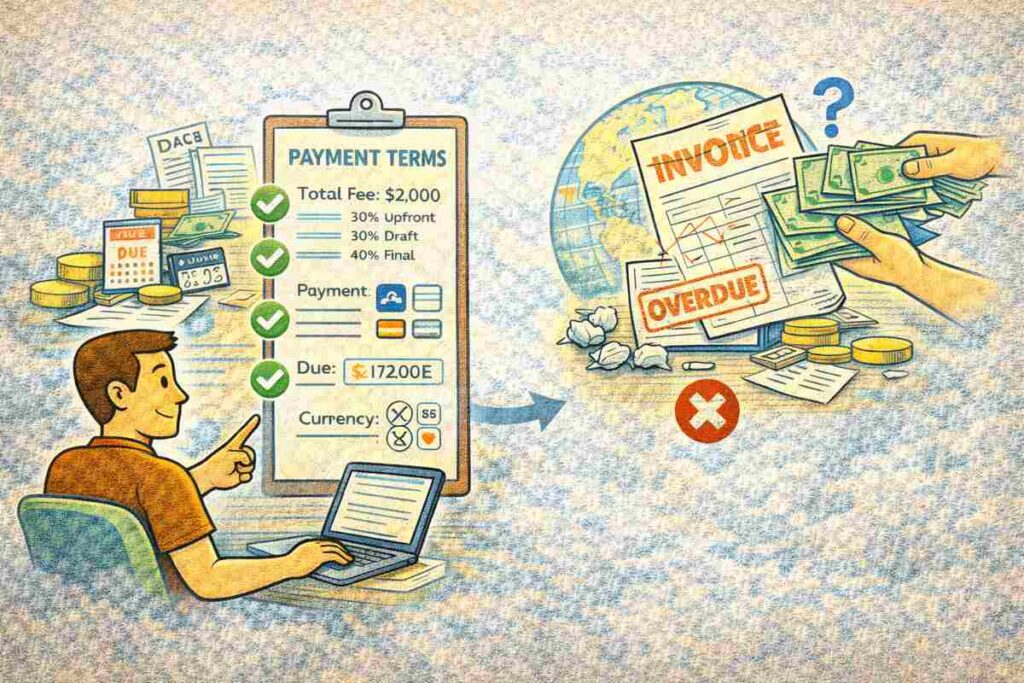
Talent doesn’t pay bills, payments do.
Best Practice:
Require 30–50% upfront before starting work.
Without clear terms, clients control the timeline.
Reference: Forbes Advisor reports that unclear payment terms are a major reason freelancers experience delayed or missing payments.
Takeaway: A contract without payment terms is a gamble.
Who owns the work and when must be crystal clear.
Critical Detail:
Never transfer ownership before payment clears.
Without this clause, clients may:
Reference: The U.S. Copyright Office explains that ownership defaults can vary without written agreements.
Takeaway: Payment and ownership should move together.

Revisions are normal. Unlimited revisions are not.
Example:
“Two revision rounds included. Additional revisions billed at $75/hour.”
This clause protects your time and sets boundaries.
Takeaway: Revisions should be predictable, not endless.
Every contract should explain how it can end.
Example:
“If the project is terminated early, the client agrees to pay for all work completed up to the termination date.”
Without this clause, clients can cancel mid-project without paying.
Reference: LegalZoom highlights termination clauses as essential freelancer protection.
Takeaway: Always plan for the exit, even in good relationships.
This clause limits how much legal risk you carry.
Example:
“The freelancer is not liable for indirect or consequential damages.”
Without limits, freelancers can be exposed to disproportionate legal risk.
Takeaway: Your fee should never equal unlimited liability.
Global clients = global legal complexity.
Example:
“This contract is governed by the laws of [Your State/Country].”
Without this clause, disputes can become expensive and confusing.
Reference: Nolo explains how governing law clauses protect independent contractors.
Takeaway: Control where disputes are resolved.
After a client attempted to cancel a project halfway through, a freelance developer relied on her termination and payment clauses.
Result:
Lesson: Contracts work when you need them most.
| Situation | With Contract | Without Contract |
|---|---|---|
| Scope clarity | Clear | Vague |
| Payment protection | Strong | Weak |
| Dispute resolution | Defined | Risky |
| Client respect | Higher | Lower |
| Stress level | Lower | Higher |
1. Do I need a lawyer to create a contract?
Not always, but templates should be reviewed when possible.
2. Can email agreements replace contracts?
They’re risky and harder to enforce.
3. Should I customize contracts per client?
Yes, especially scope and payment terms.
4. Are digital signatures valid?
Yes, in most jurisdictions.
5. Can contracts scare clients away?
Only the wrong ones.
A freelance contract isn’t about mistrust, it’s about professionalism. Clear clauses protect both sides, reduce conflict, and signal that you take your work seriously.
In 2026, freelancers who thrive aren’t just talented, they’re protected.
If this guide helped you strengthen your freelance business, share it or explore more professional freelancing resources on our blog.