Physical Address
304 North Cardinal St.
Dorchester Center, MA 02124
Physical Address
304 North Cardinal St.
Dorchester Center, MA 02124


Freelance Workload Management is the key to turning flexibility into sustainable success. Freelancing offers freedom, control, and autonomy, but without strong workload systems, that freedom quickly turns into overwhelm. Many freelancers struggle not because they lack clients, but because they lack effective ways to manage time, energy, and commitments.
Studies highlighted by Harvard Business Review show that knowledge workers without clear workload structures experience higher stress, lower productivity, and faster burnout. For freelancers, this risk is amplified by irregular income, multiple clients, and blurred work-life boundaries.
This article breaks down seven stress-free and proven workload management systems that help freelancers stay productive, protect their energy, and scale sustainably, without sacrificing well-being.
Unlike traditional employees, freelancers must act as:
Without systems, workload becomes reactive. According to insights from Upwork, freelancers who implement structured workflows report higher client satisfaction and longer-term contracts.
Effective workload management:
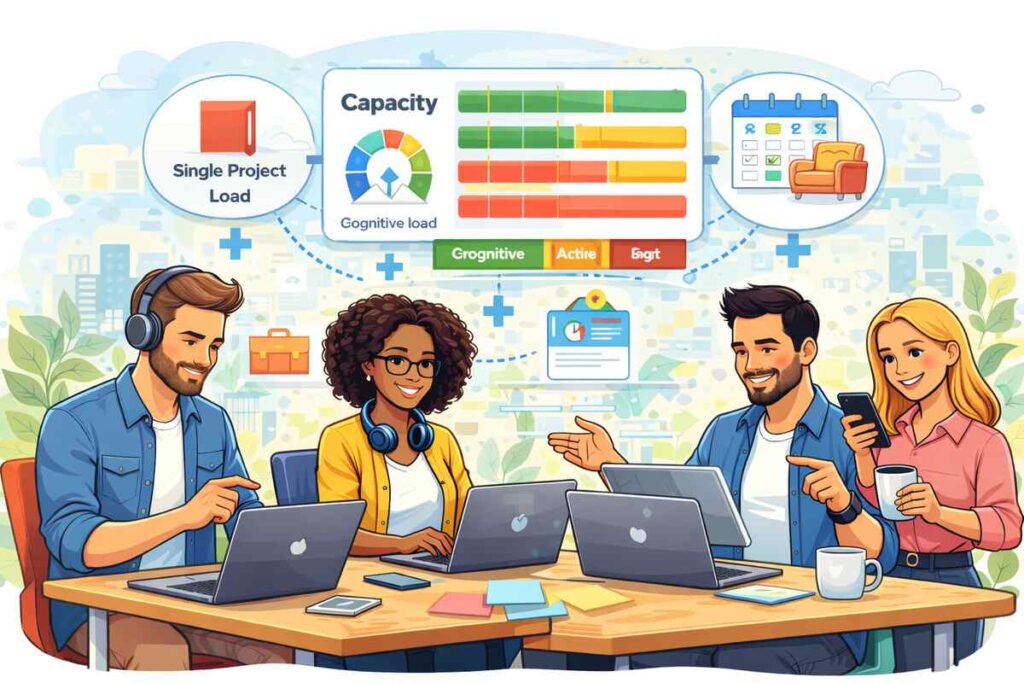
Most freelancers underestimate their true capacity.
Instead of booking work by hours alone, capacity-based scheduling accounts for cognitive load, context switching, and recovery time. Productivity research from Cal Newport emphasizes that deep work requires intentional limits.
How to apply this system:
Working less, strategically, often produces more.
Scattered task lists create mental clutter.
Freelancers who centralize tasks reduce decision fatigue and missed deadlines. Digital productivity analysis from Todoist highlights the importance of one trusted task system.
Best practices:
Clarity lowers stress immediately.

Not all clients require equal energy.
High-performing freelancers categorize clients by workload intensity and revenue impact. Business strategy insights from Bain & Company show that focusing effort on high-value relationships increases profitability.
Example tiers:
This system informs scheduling, boundaries, and pricing.
Freelancers often overbook creative energy.
Time blocking, when done correctly, includes rest and recovery. Neuroscience-backed productivity research from Cleveland Clinic confirms that regular breaks improve sustained performance.
Effective blocking approach:
Recovery is part of productivity, not a reward for it.

Scope creep is a workload killer.
Without written boundaries, client requests expand endlessly. Freelance contract guidance from AND CO shows that clear scope definitions dramatically reduce disputes and overload.
What to define upfront:
Boundaries protect both time and relationships.
Freelancers rarely stop to recalibrate.
A weekly review creates awareness before stress accumulates. Productivity experts featured by Zapier recommend weekly planning as a core performance habit.
Weekly review checklist:
Small corrections prevent major overload.
Sustainable freelancing requires planned downtime.
Long-term performance research from American Psychological Association shows that chronic overwork reduces creativity and decision quality.
How to systematize rest:
Rest is a strategic asset, not a weakness.
Even experienced freelancers struggle when they:
Systems eliminate guesswork.
Strong systems create leverage:
According to data referenced by Forbes Advisor, freelancers with structured operations earn more over time than reactive counterparts.
Freelance workload management is not about rigid schedules, it’s about intelligent structure. The seven systems outlined here replace chaos with clarity and stress with control.
When workload is managed intentionally, freelancing becomes not just sustainable, but scalable.
Freedom thrives on structure.