Physical Address
304 North Cardinal St.
Dorchester Center, MA 02124
Physical Address
304 North Cardinal St.
Dorchester Center, MA 02124

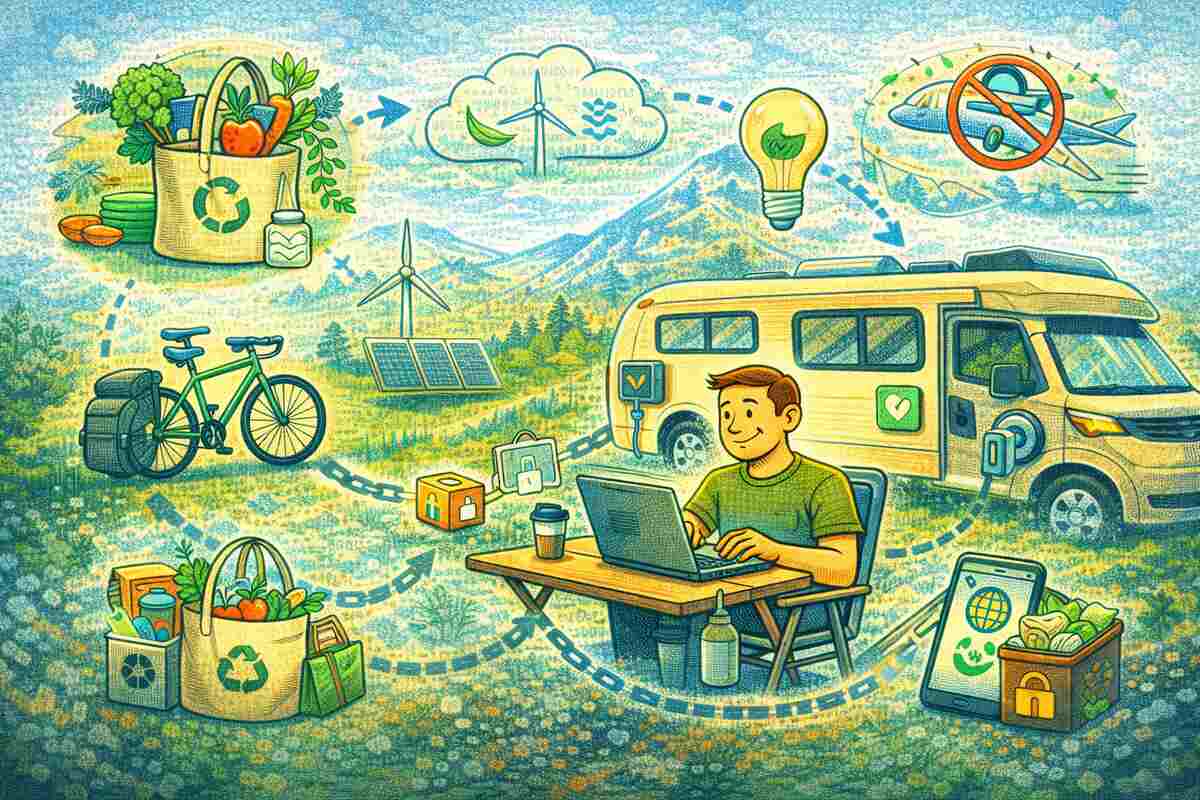
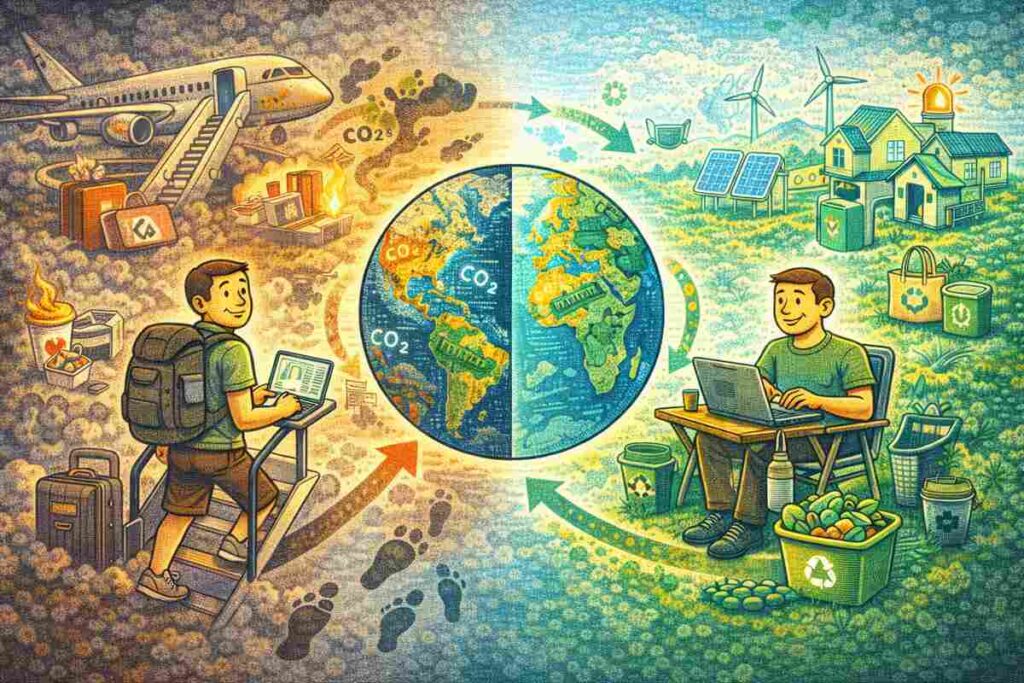
Digital nomadism has redefined how people work, live, and explore the world. But as the number of remote workers grows, so does an uncomfortable question: what is the environmental cost of a location-independent lifestyle?
In 2026, eco-conscious nomadism is no longer a niche philosophy, it’s a necessary evolution. Frequent flights, short-term rentals, energy-heavy tech use, and disposable travel habits can quietly add up to a significant carbon footprint. At the same time, remote work also presents a powerful opportunity to live more sustainably than traditional office-based lifestyles.
According to a Harvard Business Review analysis, remote work can significantly reduce emissions when paired with intentional travel and consumption habits.
This guide explores eco-conscious nomadism, how modern remote workers can travel responsibly, work sustainably, and design a lifestyle that benefits both personal freedom and the planet.
Eco-conscious nomadism is the practice of combining location-independent work with environmentally responsible choices.
It’s not about perfection or guilt, it’s about awareness and intention.
Key Insight: Sustainability isn’t about doing everything, it’s about doing better.
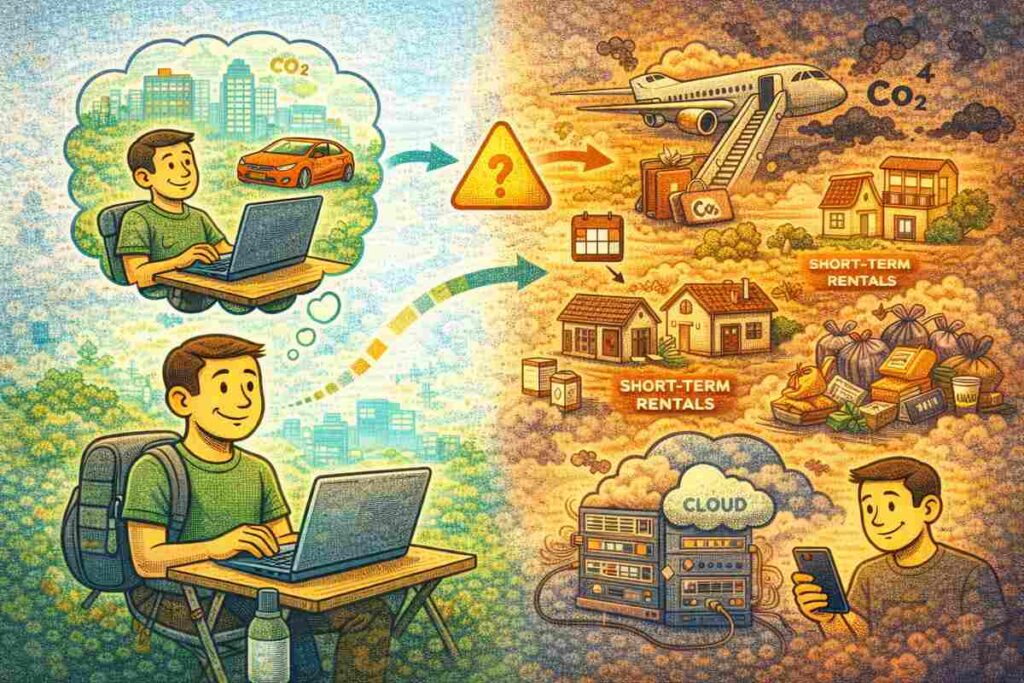
Digital nomads often assume their footprint is small because they don’t commute daily. But travel frequency and short-term living can offset those gains.
The World Economic Forum has emphasized in its climate and mobility outlook that travel patterns not just work location determine environmental impact.
Takeaway: Remote work reduces emissions only when paired with sustainable movement.
Fast travel is the biggest environmental cost of nomad life.
Example: Staying three months in one city instead of hopping every two weeks can reduce travel emissions by more than half.
Research Insight: MIT Technology Review notes that slow travel is one of the most effective ways individuals reduce travel-related emissions.
Takeaway: Staying longer is the single biggest sustainability upgrade.
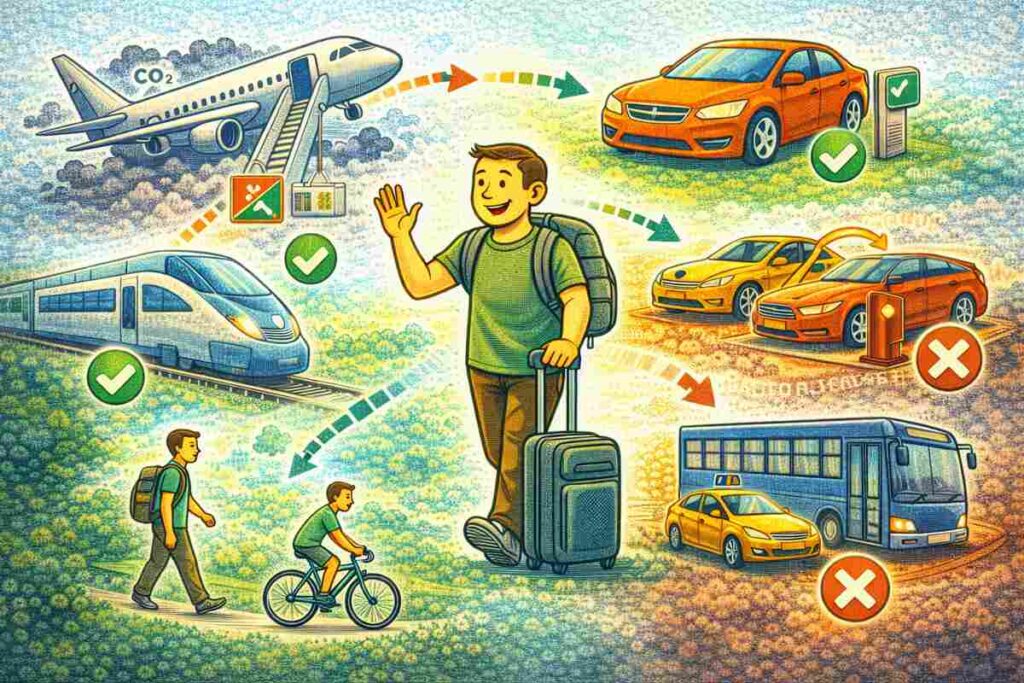
Transportation decisions matter more than any other travel habit.
Example: Many nomads in Europe now prioritize rail routes over flights for regional movement.
The International Energy Agency explains in its mobility guidance that land-based transport dramatically lowers per-person emissions.
Takeaway: How you move matters as much as where you go.
Short-term housing often consumes more energy per person.
Insight: The U.S. Environmental Protection Agency highlights in its energy efficiency guidance that small daily habits significantly reduce energy demand.
Takeaway: Temporary living doesn’t excuse permanent waste.
Remote work is digital and digital work has environmental costs.
Research Note: A Forbes Advisor report highlights growing awareness around digital carbon footprints.
Takeaway: Invisible emissions still count.
Eco-conscious nomadism is also social sustainability.
Example: Choosing locally owned coworking spaces helps keep economic value within the community.
Takeaway: Sustainability includes people not just the planet.
Nomads often generate more waste due to convenience purchases.
Insight: The United Nations Environment Programme emphasizes in its waste reduction guidance that prevention beats recycling.
Takeaway: The easiest waste to manage is the waste you avoid.
Sustainability isn’t only environmental it’s personal.
Burnout leads to poor decisions, excessive travel, and unsustainable consumption.
Takeaway: A sustainable life requires sustainable energy yours included.
After years of rapid travel, one remote worker shifted to a slow-nomad model:
Result:
Lesson: Sustainability improves quality of life.
| Aspect | Traditional Nomadism | Eco-Conscious Nomadism |
|---|---|---|
| Travel pace | Fast | Slow |
| Emissions | High | Lower |
| Housing | Short-term | Medium-term |
| Local impact | Minimal | Positive |
| Lifestyle stress | High | Balanced |
1. Is eco-conscious nomadism more expensive?
Often no, slow travel usually reduces costs.
2. Can flying ever be sustainable?
Less frequently, combined with longer stays.
3. Do carbon offsets help?
They help, but reduction matters more.
4. Is sustainability realistic for full-time nomads?
Yes, with intentional choices.
5. Does eco-conscious travel reduce freedom?
No, it enhances depth and meaning.
Eco-conscious nomadism isn’t about sacrificing freedom, it’s about protecting it. A planet under strain limits everyone’s mobility, opportunity, and quality of life.
By traveling slower, consuming thoughtfully, working sustainably, and supporting local ecosystems, modern remote workers can enjoy global freedom without global harm.
In 2026 and beyond, the most respected digital nomads won’t be the ones who travel the fastest—but the ones who travel wisely.
If this guide inspired you to rethink sustainable remote living, share it or explore more future-of-work and nomad lifestyle insights on our blog.