Physical Address
304 North Cardinal St.
Dorchester Center, MA 02124
Physical Address
304 North Cardinal St.
Dorchester Center, MA 02124



Hybrid Work 2025 has transformed more in the past five years than in the previous fifty. Remote work, once a temporary solution, has evolved into a hybrid model a flexible blend of in-office collaboration and remote productivity. But as we approach 2025, this balance is shifting yet again. From AI integration to global talent mobility, hybrid work is entering a new phase that will reshape how we define success, teamwork, and even office space itself.
According to a Microsoft Work Trend Index, over 70% of employees want flexible remote options, while 65% of leaders crave more in-person collaboration. The future lies not in choosing one or the other but in designing systems that harmonize both.
Here are five surprising shifts that will redefine your office and change the way you work in 2025 and beyond.
Best for: Companies seeking to boost culture and collaboration.
Gone are the days when employees came to the office simply to sit at a desk. The office of 2025 will prioritize experiences over presence spaces that inspire connection, creativity, and culture.
Emerging Trends:
Example: Google redesigned several of its campuses to include nature-inspired lounges, soundproof “focus pods,” and hybrid-enabled meeting rooms. The result? Increased employee satisfaction and more intentional office visits.
Pro Tip: If you manage a team, redesign your in-person days around collaboration, brainstorming, and social engagement not tasks that can be done remotely.
Takeaway: The new office is about purpose, not presence.

Best for: Professionals looking to enhance productivity and creativity.
Artificial intelligence isn’t coming it’s already here, embedded in nearly every productivity platform. By 2025, AI tools will play a central role in hybrid work by automating mundane tasks and amplifying human potential.
How AI Will Shape Work:
Example: A marketing agency implemented AI-driven time-tracking to identify burnout trends. Within months, they reduced overtime hours by 30% and improved employee well-being.
Research Insight: A McKinsey report predicts AI could automate up to 25% of work tasks across industries by 2025, freeing professionals for creative and strategic work.
Takeaway: AI won’t replace you but the person using AI might.
Best for: Distributed organizations and digital nomads.
The pandemic taught companies that talent can come from anywhere. Now, global hiring is standard—but managing time zones remains a major challenge. The new trend for 2025 is time zone flexibility, where asynchronous workflows replace rigid 9-to-5 schedules.
Strategies for Success:
Example: A tech startup in Berlin and New York eliminated mandatory real-time meetings. By embracing asynchronous video updates, productivity rose 20% and employees reported less burnout.
Pro Tip: Document everything shared clarity ensures alignment without requiring everyone to be online simultaneously.
Takeaway: The future of teamwork is global, flexible, and asynchronous.
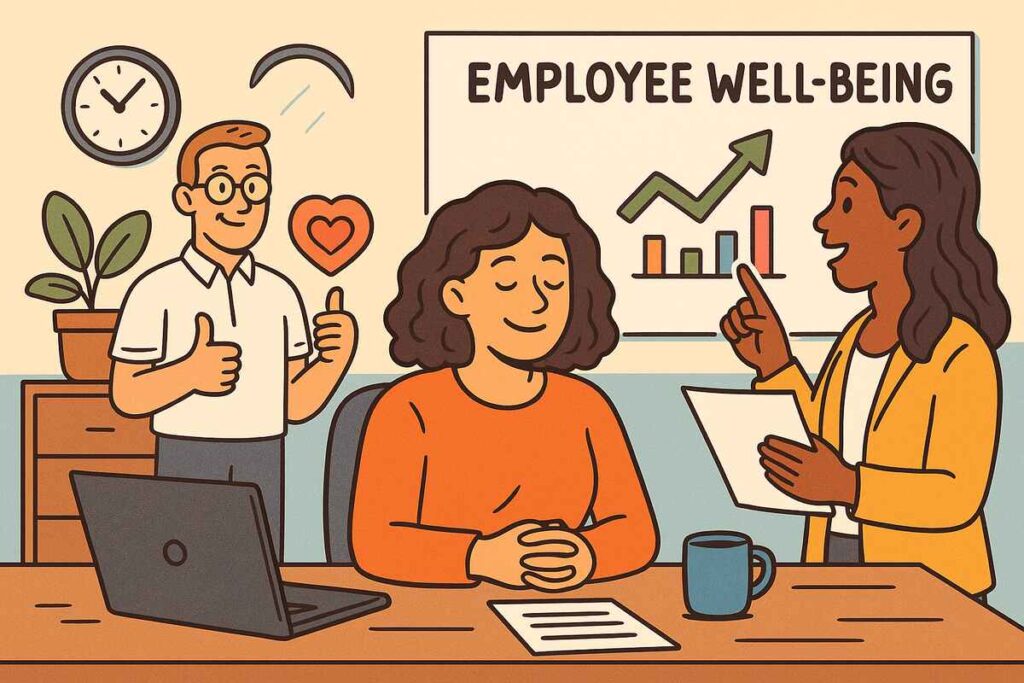
Best for: HR leaders and managers focused on retention.
Well-being has moved from “nice-to-have” to business-critical. Employees are demanding healthier, more sustainable work environments and companies are responding with programs that prioritize balance over burnout.
Emerging Well-Being Initiatives:
Research Insight: The World Health Organization found that long working hours are linked to higher rates of heart disease and burnout making well-being initiatives both ethical and economical.
Example: A fintech firm introduced a flexible “Focus Friday” policy where no meetings are allowed. Within six months, employee satisfaction scores rose 15%, and project delivery rates improved by 10%.
Pro Tip: Measure productivity by quality, not quantity. Healthier employees produce better, more sustainable outcomes.
Takeaway: The companies that thrive in 2025 will prioritize people, not just profits.
Best for: Professionals seeking purpose-driven development.
Traditional career ladders are being replaced by career lattices nonlinear paths focused on skills, experiences, and flexibility. As hybrid work evolves, professional development will shift from hierarchy to holistic growth.
What’s Changing:
Example: Instead of chasing promotions, software engineer Priya built her career by expanding skills in UX design and AI. She later transitioned into a hybrid product strategist role proof that growth today means agility, not titles.
Pro Tip: Embrace continuous learning as part of your routine. The ability to adapt will be your greatest asset.
Takeaway: In 2025, success won’t be defined by where you work but how you grow.
When digital consultancy ElevateWorks went hybrid in 2023, the transition was bumpy employees struggled with unclear expectations and disconnection. By 2024, they implemented three key strategies: weekly virtual town halls, mental health stipends, and AI-powered task automation. The result? A 40% drop in turnover and a 25% rise in productivity.
Lesson: Hybrid work isn’t just a model it’s a mindset that evolves with trust, technology, and transparency.
| Shift | What Changes | Who Benefits | Long-Term Impact |
|---|---|---|---|
| Experience Hubs | Offices designed for collaboration | Employees & managers | Stronger culture |
| AI Integration | Automation of routine tasks | Knowledge workers | Higher efficiency |
| Time Zone Flexibility | Async global collaboration | Remote teams | Work-life balance |
| Well-Being Focus | Holistic employee care | Entire workforce | Improved retention |
| Career Redefinition | Growth through skills & agility | Lifelong learners | Future readiness |
1. Will offices disappear completely?
No. Offices will evolve into spaces for connection and creativity rather than daily attendance.
2. How will AI affect job security?
AI will automate tasks, not replace talent. Those who learn to use AI tools will become more valuable.
3. What’s the biggest challenge for hybrid teams?
Maintaining communication and inclusion across locations and time zones.
4. How can companies measure hybrid success?
By tracking employee engagement, retention, and performance outcomes not just hours worked.
5. Will hybrid work continue beyond 2025?
Absolutely. It’s becoming the dominant model for most industries worldwide.
The future of hybrid work is not about location it’s about liberation. It gives people the freedom to choose how, when, and where they do their best work. As technology advances and priorities evolve, companies that embrace flexibility, empathy, and continuous learning will lead the charge.
Hybrid work isn’t an experiment anymore it’s the foundation of a smarter, more human way to work.
If this article inspired you to rethink your workplace strategy, share it with your team and explore more insights about the future of work on our blog.