Physical Address
304 North Cardinal St.
Dorchester Center, MA 02124
Physical Address
304 North Cardinal St.
Dorchester Center, MA 02124


Remote Work Taxes have become far more complex as location-independent work becomes the norm. While flexibility and freedom are major benefits, many remote employees, freelancers, and digital nomads still assume taxes work the same way they always have, until penalties, audits, or unexpected bills appear.
According to the Internal Revenue Service, tax compliance errors tied to remote and self-employed work have increased as more people earn income across state and national borders. The issue isn’t negligence, it’s confusion. Tax systems were not built for borderless work.
This article exposes six costly, confusing remote work tax mistakes professionals make every year and shows how to avoid them before they harm your finances.

Many remote employees believe their employer automatically withholds and files taxes correctly, regardless of where they live or work. This assumption can be expensive.
When you work remotely from a different state or country than your employer, tax obligations may shift. Guidance from ADP confirms that employers are not always required, or able, to handle every local tax obligation on your behalf.
Why this is dangerous:
How to avoid it:
Remote work increases responsibility, not reduces it.
In the United States, where you work often matters more than where your employer is located.
Most states apply “nexus” rules, meaning earning income while physically present creates a tax obligation. Research summarized by Tax Foundation shows that remote workers frequently owe taxes in states they didn’t expect.
Common scenarios:
Best practices:
Ignoring nexus rules is one of the most common remote tax errors.
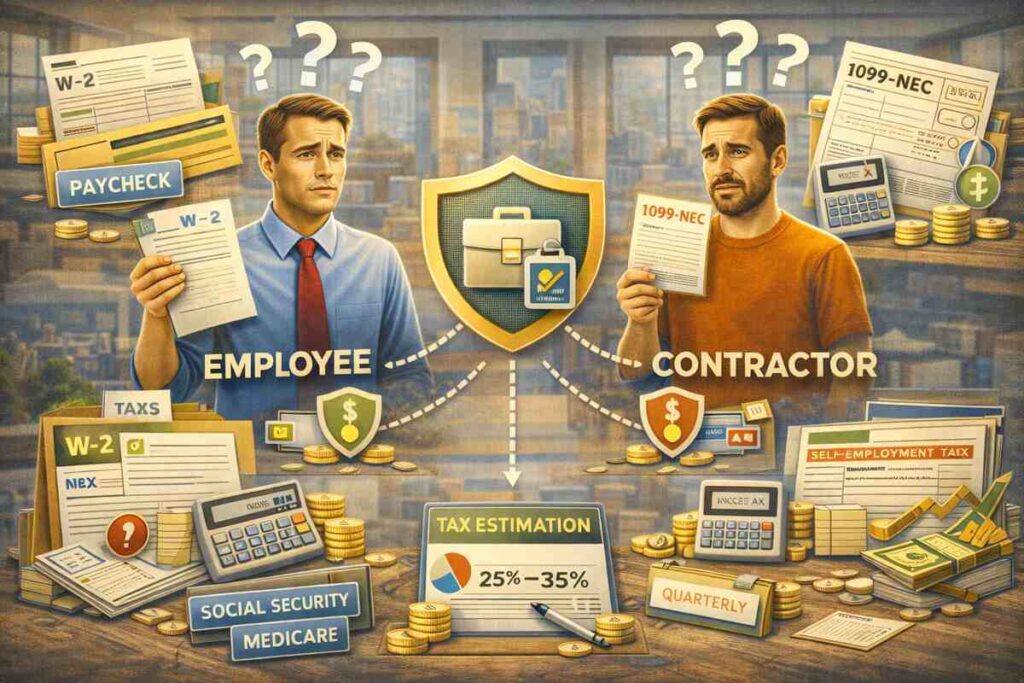
Remote work has blurred the line between employee and freelancer, but the tax treatment is very different.
Independent contractors must handle their own income tax, self-employment tax, and quarterly estimated payments. According to NerdWallet, many new freelancers underestimate their tax burden by 25–30%.
Key differences:
How to protect yourself:
Misclassification leads to underpayment and painful surprises.
Remote work across borders introduces complex international tax exposure.
Many digital nomads assume that short stays abroad don’t trigger tax obligations. However, guidance from OECD explains that tax residency, permanent establishment rules, and treaty provisions vary widely.
Potential consequences:
What to do instead:
International tax mistakes are among the most expensive to fix after the fact.

Many remote workers overpay taxes simply because they miss legitimate deductions.
Freelancers and self-employed professionals can deduct home office expenses, equipment, software, and a portion of internet and utilities. The IRS home office guidelines outline eligibility rules.
Commonly missed deductions:
Failing to claim deductions is the quietest and most common tax mistake.
Remote work income often comes from multiple sources, platforms, or clients. Without strong recordkeeping, errors are inevitable.
Accounting guidance from QuickBooks emphasizes that poor documentation is one of the top causes of audits and denied deductions.
Essential records to maintain:
Good records don’t just reduce taxes, they reduce stress.
Do remote workers always pay taxes where they live?
Not always. It depends on residency, sourcing rules, and tax treaties.
Can I be taxed in two places at once?
Yes, but credits or exclusions may apply.
Should remote workers hire a tax professional?
In many cases, yes, especially for multi-state or international work.
Remote work offers freedom, but tax compliance is the price of that freedom. The six mistakes outlined above are common, costly, and entirely avoidable with proper awareness and planning.
By understanding your obligations, tracking your work location, claiming valid deductions, and maintaining strong records, you can avoid penalties while keeping more of what you earn.
In remote work, tax knowledge is not optional, it’s financial protection.