Physical Address
304 North Cardinal St.
Dorchester Center, MA 02124
Physical Address
304 North Cardinal St.
Dorchester Center, MA 02124


The Rise of Emerging Nomad Hubs reflects a permanent shift in how people design their careers and lifestyles through remote work. By 2026, digital nomadism has moved beyond traditional hotspots like Bali, Lisbon, and Chiang Mai. While these cities remain attractive, rising costs, overcrowding, and visa limitations are pushing remote workers to look elsewhere. As a result, a new generation of destinations is taking shape.
According to global remote work data from platforms such as Nomad List, secondary cities are now outperforming traditional hubs in affordability, internet stability, and long-term livability. These lesser-known locations offer a compelling mix of affordability, reliable infrastructure, cultural depth, and quality of life, often without the downsides of overtourism.
Governments are also adapting by introducing digital nomad visas, investing in connectivity, and encouraging longer stays instead of short-term tourism, as highlighted by policy trackers like Global Citizen Solutions.
This article explores the rise of emerging nomad hubs and highlights some of the best underrated cities for remote work in 2026, places that balance productivity with genuine lifestyle value.
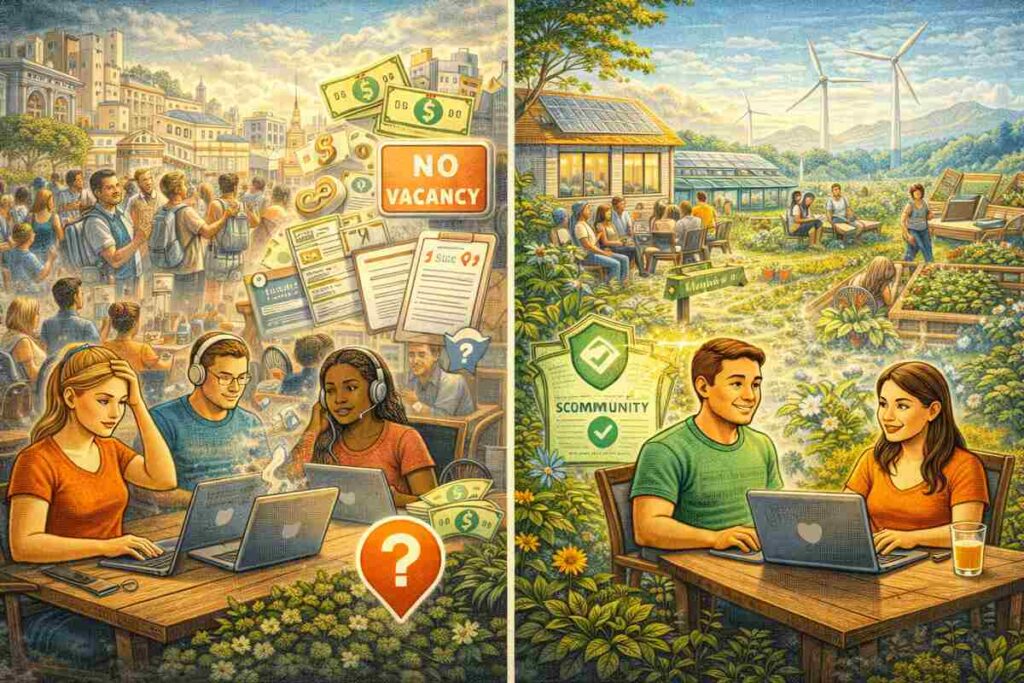
The first wave of digital nomad cities succeeded because they were cheap, scenic, and well-connected. However, popularity brought consequences:
In contrast, emerging hubs tend to prioritize sustainability, community, and long-stay residents. They attract nomads who are no longer chasing novelty but instead value routine, deep cultural immersion, and work-life balance.
By 2026, the ideal remote work destination is no longer just “cheap and sunny.” It must also be stable, livable, and future-ready.
Not every affordable city qualifies as a remote-work-friendly hub. The most promising emerging destinations share several key traits:
With these criteria in mind, let’s explore some of the most compelling lesser-known cities for remote work in 2026.
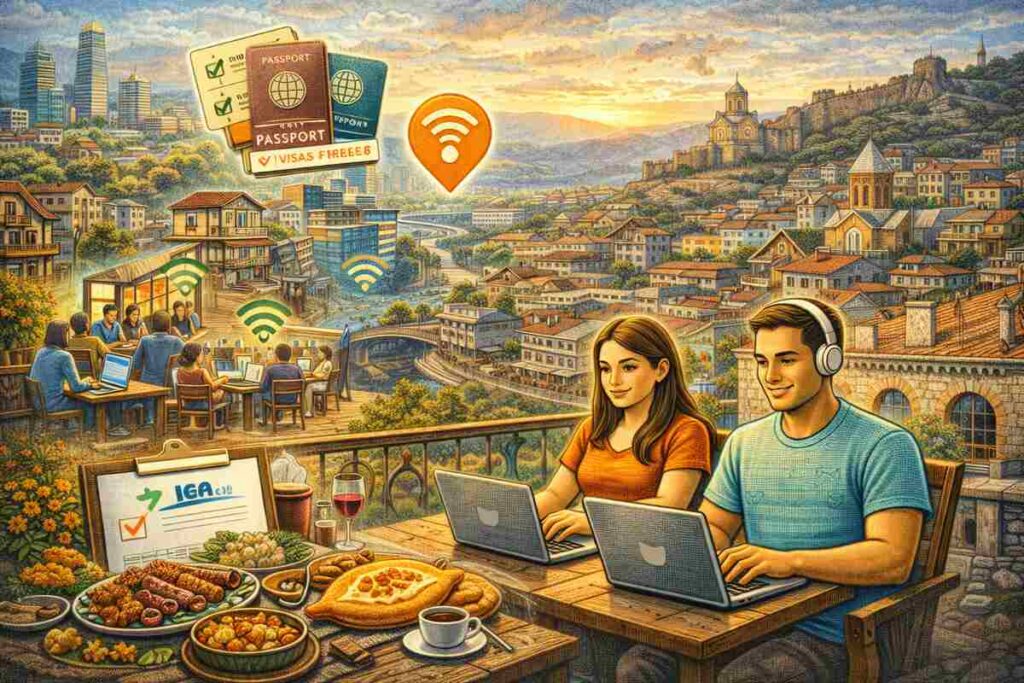
Tbilisi has quietly become one of the most remote-work-friendly cities in the world. Georgia allows citizens of many countries to stay visa-free for up to one year, a policy officially outlined on the Georgian government’s immigration portal.
The city blends old-world charm with modern cafés, coworking spaces, and surprisingly fast internet. Rent remains affordable compared to Western Europe, and the food scene, deeply rooted in tradition, is both unique and inexpensive.
Why Tbilisi stands out in 2026:
Tbilisi is especially appealing to remote workers who value history, slower living, and a sense of place rather than a purely tourist-oriented lifestyle.
Medellín is not entirely unknown, but by 2026 the real opportunity lies outside its most famous neighborhood, El Poblado. Areas like Laureles and Envigado offer a more authentic, affordable, and livable experience.
With Colombia’s digital nomad visa now well-established through the Colombian Ministry of Foreign Affairs, Medellín continues to attract remote workers looking for warm weather, strong infrastructure, and vibrant culture, without Southeast Asia’s long flights or European prices.
Why Medellín remains relevant:
For nomads seeking community without chaos, Medellín’s quieter districts are among the best choices in Latin America.
While cities like Bangkok and Ho Chi Minh City dominate the nomad spotlight, Da Nang has emerged as a calmer, more balanced alternative. Located between the beach and the mountains, the city offers a rare combination of affordability, nature, and modern infrastructure.
By 2026, Vietnam’s remote work policies and private-sector coworking investments have significantly improved, making Da Nang one of Asia’s most promising under-the-radar hubs.
Why Da Nang is rising fast:
Da Nang is ideal for remote workers who want structure, focus, and access to nature without sacrificing comfort.
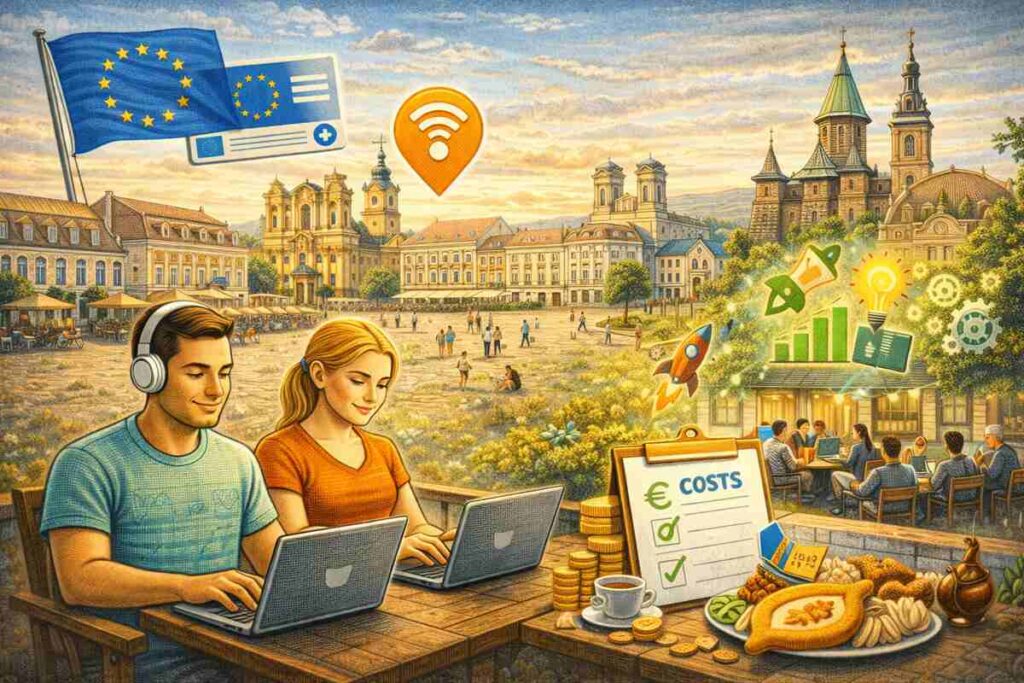
Romania has long been known for its strong tech talent, but cities like Timișoara are now attracting international remote workers as well. Often overshadowed by Bucharest and Cluj-Napoca, Timișoara offers excellent infrastructure, beautiful architecture, and lower rents.
As part of the European Union, Romania provides stability, safety, and access to the broader EU, without Western European living costs.
Why Timișoara is a hidden gem:
For nomads who want a European base that supports deep work and long stays, Timișoara is a strong contender in 2026.
Penang combines modern infrastructure with deep cultural heritage. George Town, a UNESCO World Heritage site, offers walkable streets, historic architecture, and some of the best food in Asia.
Malaysia’s flexible visa options and strong English proficiency make Penang particularly attractive to Western remote workers who want Southeast Asia without the intensity of mega-cities.
Why Penang deserves attention:
Penang is well-suited for experienced nomads looking to settle into a rhythm rather than constantly move.
Plovdiv is one of Europe’s oldest continuously inhabited cities, yet it feels refreshingly modern in how it supports remote work. Bulgaria’s low cost of living and improving digital infrastructure have made it increasingly attractive to freelancers and entrepreneurs.
By 2026, Plovdiv’s creative scene, café culture, and coworking spaces have expanded, without losing the city’s relaxed pace.
Why Plovdiv is gaining traction:
Plovdiv is ideal for remote workers who value inspiration, calm, and authenticity.
The rise of emerging nomad hubs signals a shift in mindset. Remote workers in 2026 are no longer chasing checklists of countries visited. Instead, they are building temporary lives, staying longer, forming routines, and integrating into local communities.
Cities that succeed as nomad hubs in the future will not be the loudest or trendiest, but the most livable. They will support deep work, mental health, and sustainable growth for both visitors and locals.
The best lesser-known cities for remote work in 2026 are not hidden because they lack value, but because they have avoided overexposure. Tbilisi, Da Nang, Timișoara, Penang, Plovdiv, and emerging neighborhoods in Medellín all represent a more mature phase of digital nomadism.
For remote workers willing to look beyond the obvious, these cities offer something increasingly rare: affordability without compromise, community without crowds, and productivity without burnout.
In the coming years, the smartest nomads won’t follow trends, they’ll move ahead of them.